Searching for emergent properties in the metabolism of E-coli
Seren Fowler, Bucknell University, Physics Major
Mentored by Dr. Jeremy Schmit
The direct interaction between the products of genes in e-coli are well known and the biosynthesis pathways mapped out. However, I am looking for a cell-wide communication method because we do not yet have the ability to describe and predict things of this scale inside the cell. I used data collapse analysis on growth rate data produced by Kimberly Reynolds (Cell Systems, 2024) using gene knockdowns in e-coli to look for a gene that could affect multiple biosynthesis pathways cell wide.
fbaA showed a particularly interesting graph in which when fbaA was above a threshold (approximately 1-0.1% of wild-type expression), reducing the other gene reduced growth, however, when fbaA was below this threshold, reducing the other gene increased growth. This was present to some degree in all gene pairings that included fbaA, and came through very clearly when paired with genes in all pathways studied. This suggests that there could be an interesting interaction with fbaA to study in further research.
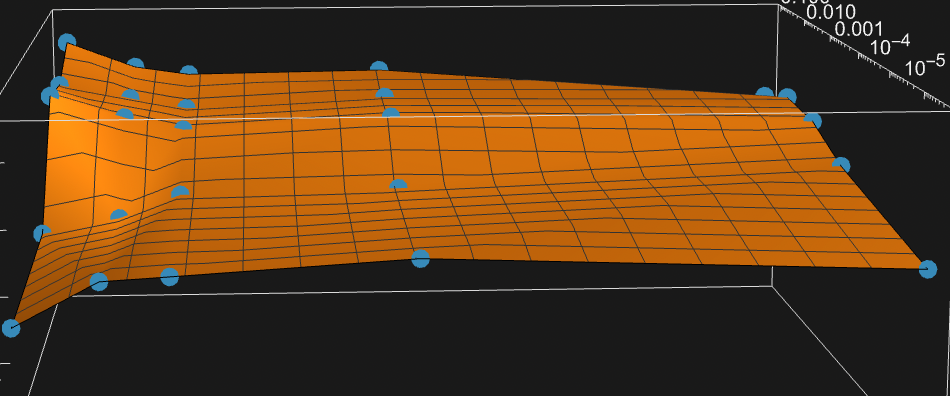
Fig. 1. fbaA and dapB showing the pattern of the emerging cliff
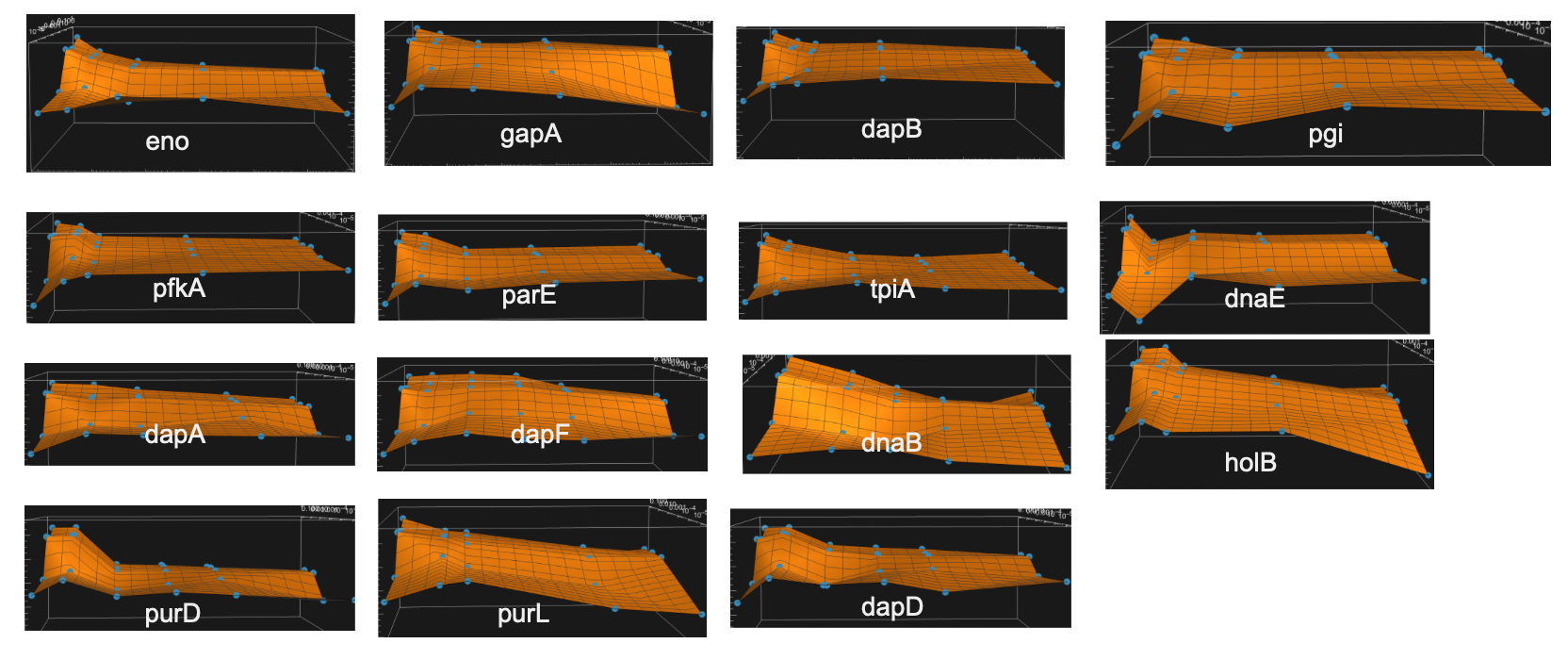
Fig. 2. fbaA gene combinations
References
Reynolds, Kimberly A. (2024). A continuous epistasis model for predicting growth rate given combinatorial variation in gene expression and environment. Cell Systems 15(2), 134-148.
Bhattacharyya, S., Ranganathan, S., Chowdhury, S. et al. (2025) Conserved interfaces mediate multiple protein–protein interactions in a prokaryotic metabolon. Molecular Systems Biology 21, 1490–1521.
Bhattacharyya, S., Bershtein, S., Adkar, B.V. et al. (2021). Metabolic response to point mutations reveals principles of modulation of in vivo enzyme activity and phenotype. Molecular Systems Biology 17, MSB202110200.
Abernathy, M.H. (2008). Comparative studies of glycolytic pathways and channeling under in vitro and in vivo modes. Biotechnology and Bioengineering 65(2) 483-490.
Jumper, J., Evans, R., O'Neill, A., Saltzman, J. et al. (2021). Highly accurate protein structure prediction with AlphaFold. Nature 596(7873), 583-589.
Bertoni D. et al. (2025). AlphaFold Protein Structure Database 2025: A redesigned interface and updated structural coverage, Nucleic Acids Research.
Acknowledgments
This material is based upon work supported by the National Science Foundation under Grant No. 2548403. Any opinions, findings, and conclusions or recommendations expressed in this material are those of the author(s) and do not necessarily reflect the views of the National Science Foundation.