Graduate Alumni Spotlight: From Molecular Dynamics to Defense R&D
A Conversation with Travis Severt (PhD ’21)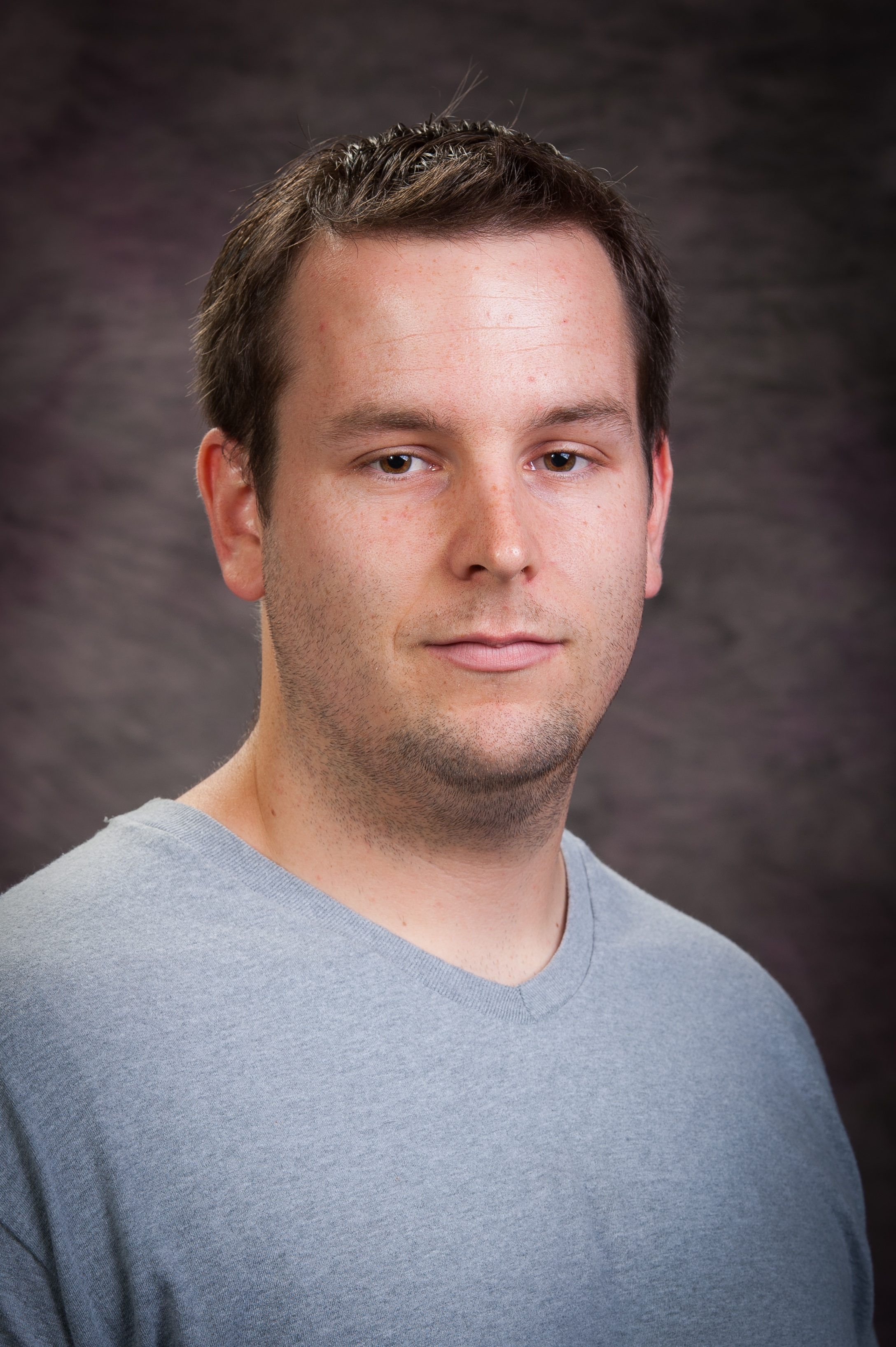
The path from academic research to the private sector is rarely linear. Travis Severt has navigated that transition successfully, bridging the gap between academia and industry. After earning his PhD in the AMO group under Prof. Itzik Ben-Itzhak, Travis moved from fundamental AMO research to a career at the forefront of national defense.
Travis was first drawn to Manhattan as a participant in the 2011 Research Experience for Undergraduates program. A California native attending California Lutheran University, he made such a strong impression on his mentor, Itzik Ben-Itzhak, that he was invited back the following summer. The goal was to recruit him into the department’s PhD program—and it worked.
Travis joined the graduate program as a Graduate Research Assistant in Spring 2013. His work in the JRM lab provided him with more than technical expertise; it instilled a lasting philosophy of engineering and problem-solving. Reflecting on the most valuable advice he received from Dr. Ben-Itzhak, Travis recalled a practical warning: “Don’t design a system to do everything, because it will do nothing well.” This insight has proven prescient throughout his industry career, guiding his efforts to help program managers set realistic, achievable goals. As he puts it, “K-State Physics prepared me for my career by teaching me how to ask the right questions and to continue learning—essential skills for exploring new fields and applying them to next-generation technologies.”
Travis completed his PhD in 2021. While his research was rigorous, his fondest memories are defined by the people he encountered along the way. “I remember talking with Kim Coy in the graduate program office whenever I needed a break from the lab,” he recalls, “as well as coordinating with the JRM technical staff—Chris Aikens and Justin Millette, the bike rides with Naoki Iwamoto and Professor Daniel Rolles, and the camaraderie with other grad students. The people are who I miss most about Manhattan.”
Travis’s transition to the professional world was facilitated by his K-State Physics network. His first role at Northrop Grumman came after fellow JRM alumnus Ben Berry recommended him. There, he developed prototype electro-optical and infrared systems for defense applications. In fall 2025, Travis moved to the Johns Hopkins Applied Physics Laboratory, where he now conducts R&D for a range of defense applications.
A typical day for Travis blends theory and experimentation. He often begins by reviewing academic literature, looking for new developments to inform his work. From there, he transitions to developing computer simulations or hands-on experimentation—what he describes as “cool laser stuff”—to evaluate system performance. He also spends 1-2 hours each day in meetings to keep projects moving forward.
He encourages current students to focus on building strong fundamentals and transferable skills during graduate school. “Your specialized knowledge will likely not directly apply to an industry position,” he explains. “But with solid fundamentals, you can quickly learn anything.” He identifies communications as the most important transferable skill to develop: “You need to be able to explain technical details to key stakeholders without knowledge in the subject, clearly communicating the significance of your work and its relevance to achieving the overarching objectives.”
As for industry life, Travis notes that the defense sector can offer a strong work-life balance. Whether it was the “9/80” schedule at Northrop Grumman or his current role at APL, he values the ability to complete his workday and then fully disconnect and spend time with his wife, Brittany.
If he hadn’t become a physicist, Travis says he might have pursued optical engineering—but he’s confident he chose the right path and ended up in the right place. His advice to current students is straightforward: the skills developed at K-State in physics are in high demand. Whether you stay in academia or transition to industry, those fundamentals will take you far.