In
February of
2009 Dean Zollman was co-Director for the PHYS Workshop which occurred at
the International Centre for Theoretical Physics (ICTP), in Trieste, Italy.
The other directors were
Pratibha
Jolly (University of Delhi, India), Priscilla Laws (Dickinson College, US),
and Elena Sassi (University of Naples,
Italy).
This report on the workshop
activities originally appeared in the Newsletter of the International Commission
on Physics Education.
Physware is an initiative
launched to enhance the quality of physics education at the tertiary level,
especially in the developing world. It is a direct outcome of recommendations
from the physics education task force of the World Conference on Physics and
Sustainable Development (WCPSD).
The first Physware
workshop was held at ICTP from 16 to 27 February 2009. It brought together a
talented group of physics educators to collaboratively explore active learning
materials at the undergraduate level using prototypes of affordable hands-on
equipment that can be locally adapted for construction by
teachers and their students throughout the developing world.
Physware also aimed at
providing an exposure to appropriate
technologies and computer-based tools for enhancing conceptual understanding.
The teaching of Newtonian Mechanics was chosen as the theme for the first
workshop.
Another important aim was
to provide a
forum to the teacher-leaders to share experiences and exchange ideas about
dissemination of active learning methods as they are expected to become leaders
of similar efforts in their local regions.
A record number (for
ICTP) of more than 200 applications from 48 countries were received, 32
participants from 27 countries from Africa, Asia, Latin America and Eastern
Europe were selected.
The Physware
participants represent a multicultural and eclectic group of extremely talented
and innovative physics teachers, teacher-trainers and administrators.
Early in the workshop,
the participants were encouraged to participate in evening poster sessions where
they could present some of the innovative work done by them or some aspect of
physics education in their institution or country. This served the dual purpose
of breaking the ice and identification of areas of interest and work. The
presentations also served to identify the large common denominator of problems
faced by all countries.
The two week workshop
(with10 working days) was structured to have four blocks of one hour forty five
minutes on each day. Additionally, seven days included a two hour post dinner
block to accommodate poster sessions and special discussions. The participants
were given an exposure to physics education research based concept tests,
diagnostic tools and learning cycles that promote active engagement in the
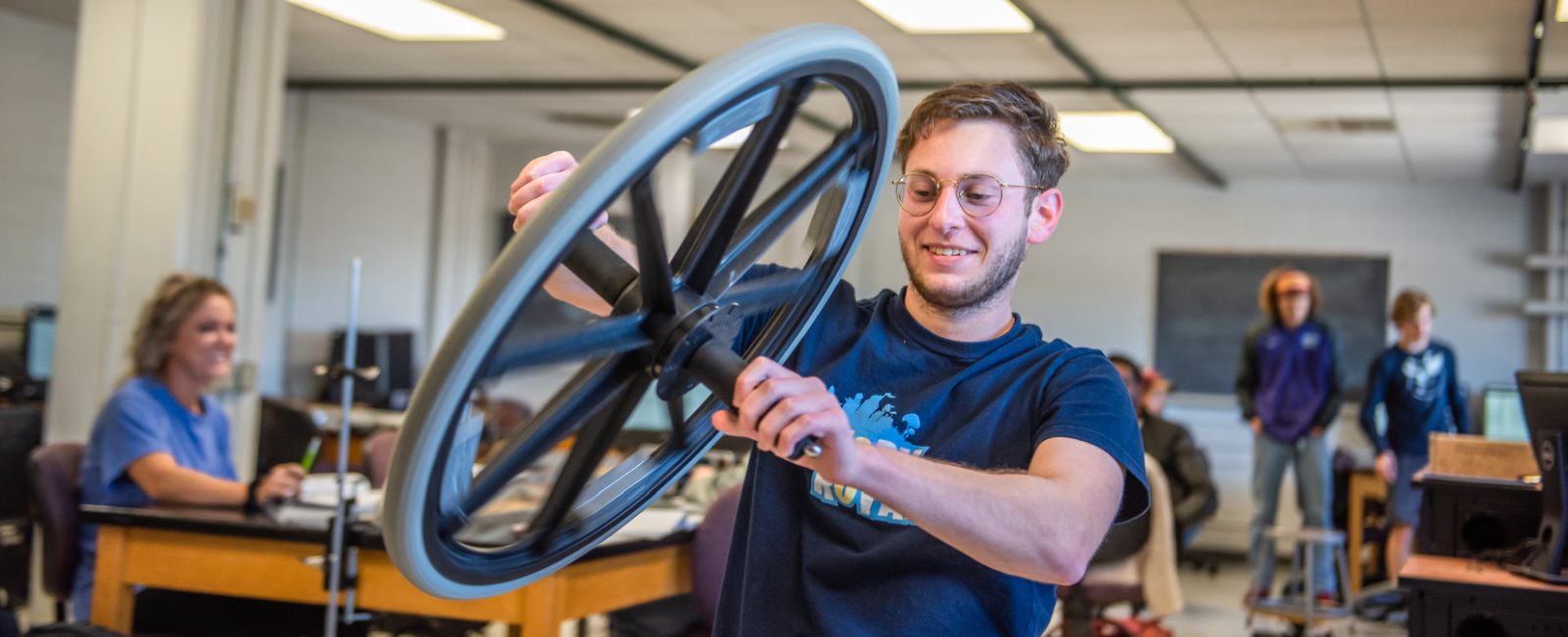
context of teaching-learning of kinematics and dynamics. The first week
activities, focused on laboratory work and class activities based on using
no-cost and locally available low-cost materials, witnessed development of
several innovative measurement set ups and procedures. For instance,
different length pendulums were used as
clocks to measure time
in arbitrary units and mahogany flower
pendulum was used to study damping. Later the ubiquitous cell phone provided a
convenient mechanism for accurate measurement of time.
In the second week, the
participants were given a rigorous exposure to computer-based measurement using
motion sensor, force sensor and photogates. Powerful video capture and data
analysis tools were used to analyze video clips of interesting motions such as
that of a basketball thrown by a player in action. A session was also devoted to
how simulations can be integrated into a learning cycle to enhance conceptual
learning.
Additionally, two special
technical sessions were organized to introduce the participants to: one, virtual
instrumentation project ongoing at the ICTP M-Lab; and second, construction of
communication networks using low-cost wireless technologies. The latter set of
demonstrations generated a great deal of interest. In another session, the
participants evaluated features of low-cost computers, including the “One Laptop
per Child” computer.
The touchstone of
Physware was collaborative work on projects. This generated a vibrant atmosphere
simulating an effective active learning environment that can be replicated for
students. In the first week, participants worked with low-cost material to
explore their use in active learning of topics of core importance in mechanics
and presented the work through posters. In the second week, projects judiciously
used appropriate computer-based technological tools. These included use of
motion and force sensors, photogates; video data and graphical analysis
software; and free/open source software. As many as fourteen projects were
carried out in a span of a day. All the groups made a power point presentation.
As an illustrative example, one of the projects evaluated effectiveness of two
different technologies, use of video capture and timing devices, to measure the
time of free fall. Two of the projects entailed creation of proposals for
workshops and a course in physics education for teachers. We hope some of this
work can be refined for publication.
Physware has successfully established a primary network of outstanding physics teachers who have an overview of validated best practices in physics education. These educators are enthusiastic about sharing their knowledge of active learning using low-cost materials and emerging technologies. They are anxious to find solutions to regional and local physics education problems. Towards this end, they would like to take a lead role in their regions and develop further the collaboration established with other Physware participants at a global level. We are pleased that ICTP has agreed to maintain a website to facilitate formation of a Physware Community of Practice to strengthen local and regional outreach of participants.