|
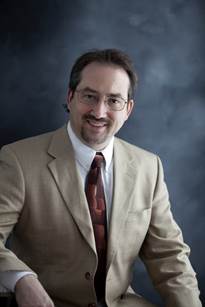
Brian
Washburn has relentlessly pursued his education and career as a research
physicist and university professor. He attended UW-Parkside, where he
earned his bachelor of science degree in physics summa cum laude in 1994,
and then did research at Argonne National Laboratory for a year before
enrolling in graduate school.
He
earned his doctorate at Georgia Tech in 2002, and the thesis he authored,
“Dispersion and Nonlinearities associated with super continuum generation
in microstructure fibers,” is still referred to by those interested in
modeling the nonlinear propagation of light in optical fiber. Also, while at Georgia Tech, Brian was a
member of the Georgia Tech Ultrafast Optical Communications Consortium,
which was a consortium between Georgia Tech, Bell South, Nortel Networks,
and Corning Incorporated to develop a 160 Gbit/s
optical time division multiplexed link.
From
2002-2005, he did research at the National Institute of Standards and
Technology, where he brought a fiber laser under careful control as an
“optical frequency comb” for the first time. Such lasers allow the
frequency of light to be measured to remarkable precision (up to 19
digits), and are a promising technology for many applications outside the
laboratory, including space-based optical clocks, atmospheric sensing,
distance ranging, and other applications.
Since
2005, he has served as a faculty member in the Physics Department at Kansas
State University, where he has trained several doctorate
and several master’s of science students in
experimental physics research. He is a highly respected teacher and was
awarded the prestigious Presidential Award for Excellence in Undergraduate
Teaching in 2015. This award recognized his extraordinary efforts to
effectively teach 250-350 engineering and science majors the introductory
level of calculus-based physics for three years running, including
overseeing the interactive laboratory-like student environment and the many
instructors that contributed to it.
Dr.
Washburn is particularly known for performing interesting and engaging
demonstrations that help students learn introductory physics. He has also
taught effectively at the upper-level undergraduate and graduate level.
Dr.
Washburn has served the scientific community at the national level, most
recently as a member of the Optical Metrology committee for one of the
primary conferences in his field, the Conference on Lasers and
Electro-Optics, Optical Metrology sub-committee.
In
2015, he spent a sabbatical leave at NIST in Boulder, Colo., furthering his
research in the development of novel lasers for optical frequency comb
spectroscopy. He also developed a novel class of lasers based on gas-filled
hollow optical fiber, and was awarded a patent on this project in 2015.
Since the beginning of his career, he has co-authored more than 70
scholarly publications in research journals and conference proceedings.
Dr.
Brian Washburn and his family reside in Manhattan, Kansas.
|